


Eye Lutein+ Zeaxanthin
Couldn't load pickup availability
Key Ingredients & Nutritional Info
Directions
See what our customers say


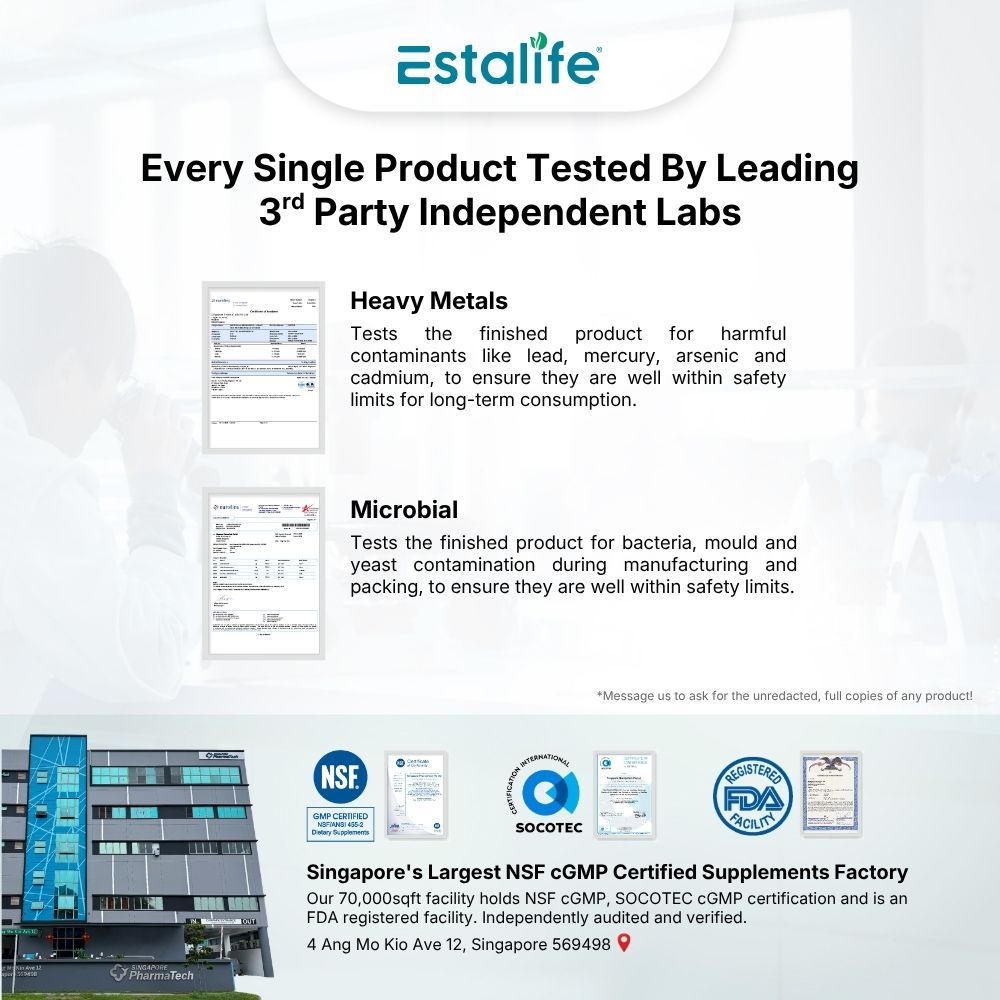
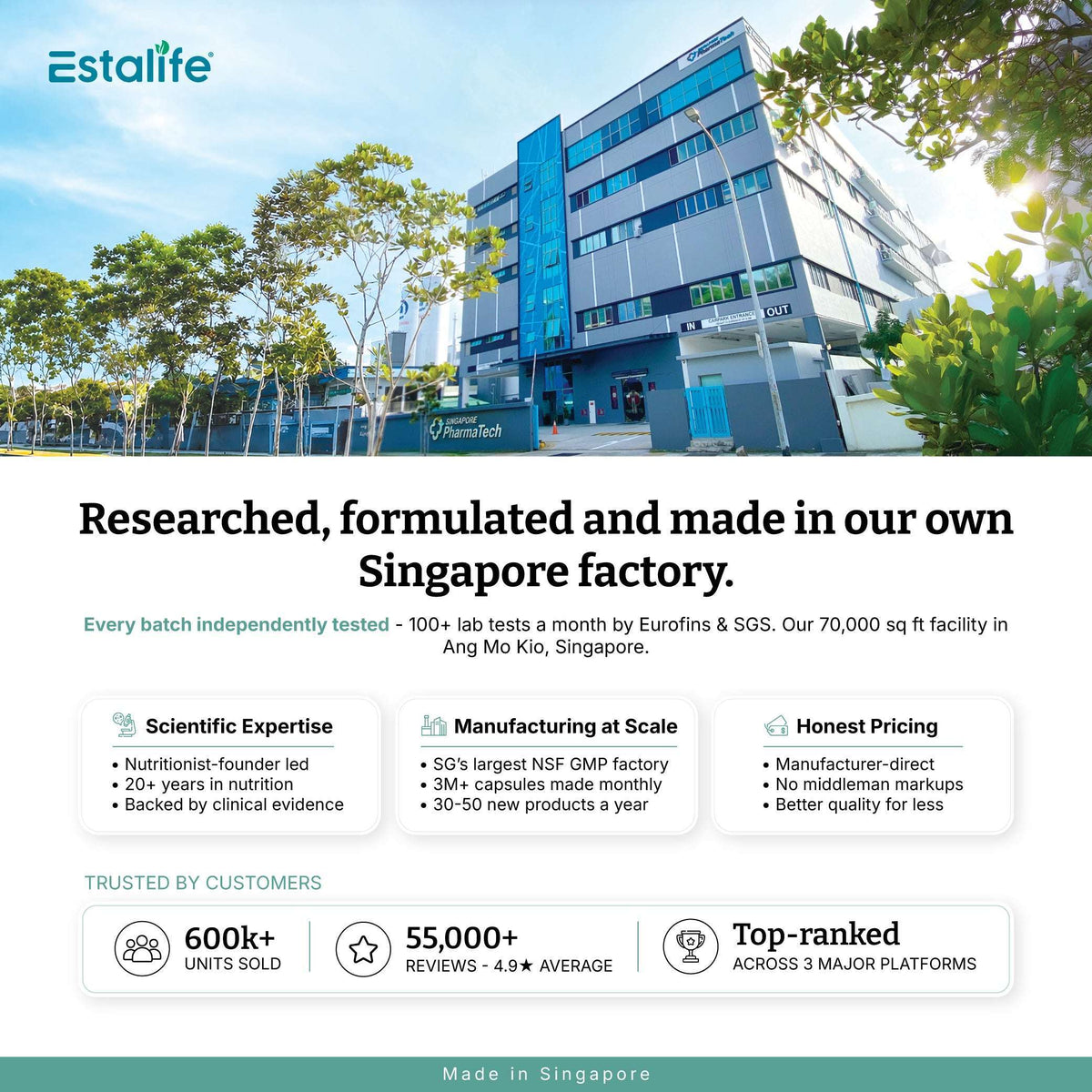


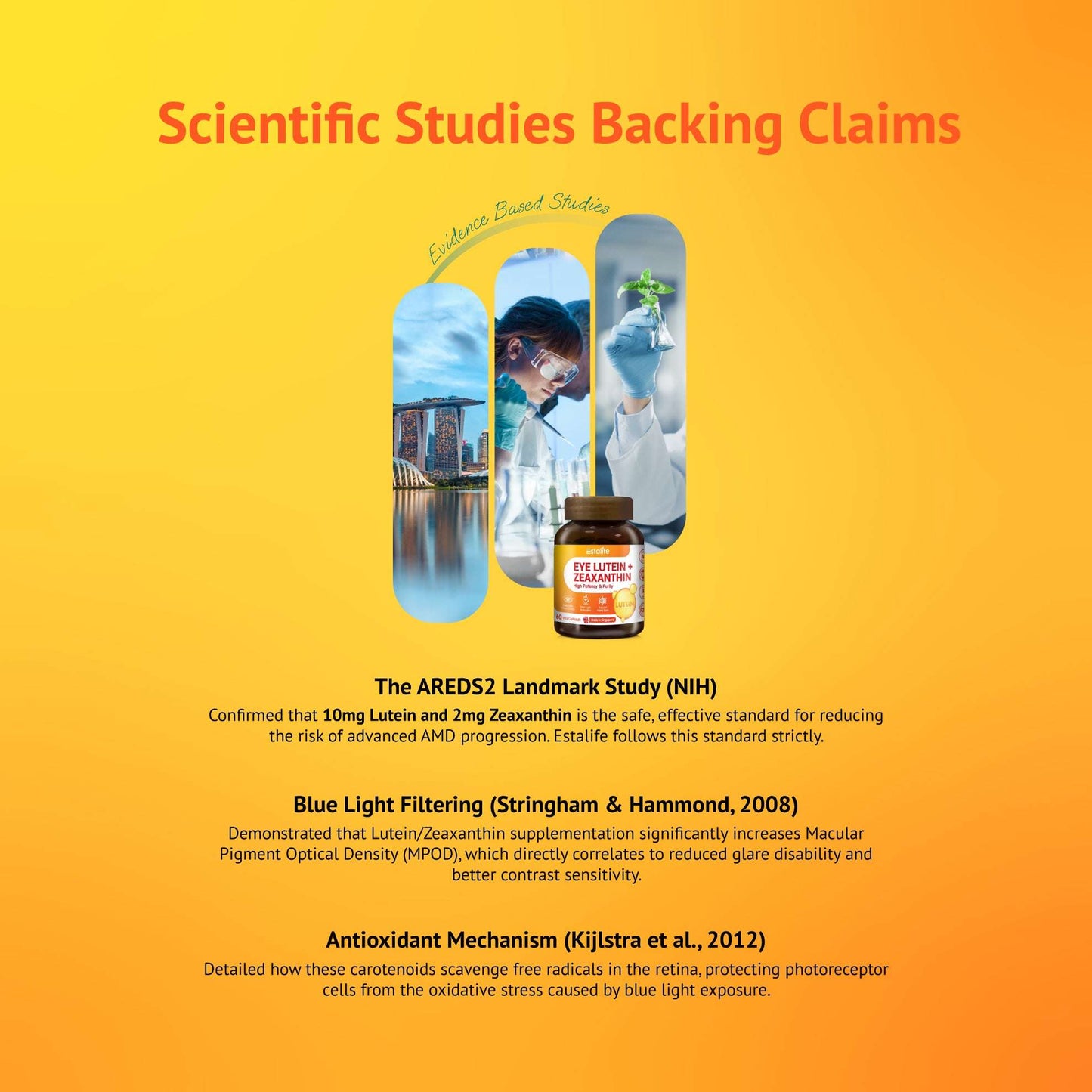
60 Veg Capsules · 30 Days Supply · Vegan · Halal-certified · Made in Singapore
🌟Why your eyes need nutrients your body can't make on its own
Lutein and zeaxanthin are the two dietary carotenoids that accumulate in the macula, the part of the retina responsible for your sharpest, central vision. Your body cannot produce them on its own, so the only way to build them up is through diet or supplementation. Most people fall well short of what research suggests is useful: average dietary intake is estimated at just 1 to 2mg per day, while a systematic review of the research found that daily intakes above 10mg are what's needed to meaningfully increase the eye's own protective pigment [4].
🌟Why lutein and zeaxanthin
Lutein and zeaxanthin work as a natural filter and shield for the macula. They absorb high-energy blue light before it reaches the light-sensitive cells behind them, and they act as antioxidants within a tissue that is especially exposed to light and oxidative stress over a lifetime of use.
The evidence for visual performance comes from people with healthy eyes, not just those with existing eye disease. A 12-month randomised, placebo-controlled trial in adults free of retinal disease found that supplementation with macular carotenoids produced statistically significant improvements in contrast sensitivity, the ability to distinguish an object from its background, at 6 and 12 months compared to placebo [1]. A 6-month randomised trial in healthy adults with high screen time exposure found similar supplementation significantly improved macular pigment density and visual performance, while reducing self-reported eye strain, fatigue, and headache frequency [2].
At the specific dose level in this product, a 16-week study in healthy Japanese adults given 20mg of lutein and 4mg of zeaxanthin daily found a statistically significant increase in macular pigment starting from week 8 and continuing through week 16 [4]. This study combined lutein and zeaxanthin with other antioxidants (vitamin C, vitamin E, zinc, and copper), so it doesn't isolate the two carotenoids alone, but it's the closest published match to this product's exact dose. Separately, a broader meta-analysis of 20 randomised controlled trials, covering both people with age-related macular degeneration and healthy subjects, found that lutein and zeaxanthin supplementation significantly increased macular pigment in both groups, with a clear dose-response relationship [3].
🌟What you get per serving
Free Form Lutein | 40mg | Daily Value not established
Zeaxanthin | 8mg | Daily Value not established
Serving size: 2 Vegetable Capsules | Servings per container: 30 | Supply: 30 days
Vegan | Non-GMO | FDA-Registered Facility | Made in Singapore
🌟Key Benefits
1. Enhanced visual clarity
In the 12-month trial referenced above, adults with healthy eyes who took macular carotenoid supplementation showed significant improvements in contrast sensitivity compared to placebo [1]. Better contrast sensitivity means an easier time distinguishing detail in low light or against a similar-coloured background, a practical, everyday measure of visual clarity.
2. Blue light protection
Digital screen use has made blue light exposure a daily reality for most adults. A 6-month randomised, placebo-controlled trial in healthy young adults with high screen time exposure (a minimum of 6 hours per day) found that macular carotenoid supplementation significantly improved macular pigment density and visual performance, while reducing self-reported eye strain, fatigue, and headache frequency [2]. Lutein and zeaxanthin physically absorb blue wavelength light before it reaches the retina's light-sensitive cells, which is the underlying mechanism behind these findings.
3. Supports aging eyes
The amount of protective pigment in the macula can be built up through diet and supplementation. A large meta-analysis of 20 randomised controlled trials found that lutein and zeaxanthin supplementation significantly increased macular pigment in healthy adults, with the effect scaling with dose [3], and a dose-matched 16-week study found the same result [4]. Since this protective pigment is something the body doesn't automatically maintain at high levels on its own, supporting it through diet or supplementation is a reasonable way to support your eyes' natural defences as you age. This is not a claim that this product treats or prevents any diagnosed eye condition.
🌟Directions of Use
Take 2 capsules daily with any meal containing healthy fats to enhance absorption, as lutein and zeaxanthin are fat-soluble nutrients. Or take as directed by a healthcare professional. Store in a cool and dry place.
Caution:
Individuals with medical conditions should consult a healthcare professional before using any dietary supplements.
🌟Who is this suitable for?
- Adults who spend significant time in front of digital screens each day
- Adults over 40, given the natural gradual decline in the eye's protective pigment with age
- Adults whose diet is low in leafy green vegetables, the primary dietary source of lutein and zeaxanthin
- Adults looking for a higher-potency lutein and zeaxanthin formula than typically found in general multivitamins
- Vegans and vegetarians, given the vegetable capsule format
🌟Why Estalife?
40mg of free form lutein and 8mg of zeaxanthin per serving, a meaningfully higher dose than most eye health supplements on the market, backed by research on how these nutrients build up protective pigment in the eye. Made and batch tested in our own NSF GMP-certified factory in Ang Mo Kio, Singapore. No middlemen. Sold directly to you.
Thank you for supporting made in Singapore.
🌟Frequently Asked Questions
Q: Does this product treat or prevent macular degeneration?
A: No. We haven't cited any trial claiming this product treats or prevents a diagnosed eye disease, and we won't make that claim. The evidence we reference is about supporting macular pigment and visual performance measures in people with healthy eyes.
Q: How long before I notice a difference?
A: The research we reference shows measurable changes in macular pigment starting around 8 weeks, with visual performance improvements recorded at 6 and 12 months in the studies cited. Building up protective pigment in the eye is a gradual process, not an overnight change.
Q: Can I take this if I already take a multivitamin with lutein in it?
A: Many general multivitamins include a small amount of lutein, often far below the doses studied for eye health specifically. Check your multivitamin label and, if you're unsure about your combined intake, ask a healthcare professional.
Q: Why do I need to take this with food?
A: Lutein and zeaxanthin are fat-soluble, meaning they're absorbed better when taken with dietary fat. Taking this with a meal containing healthy fats, as directed on the label, helps your body absorb more of it.
🌟References
[1] Nolan JM, Power R, Stringham J, et al. Enrichment of Macular Pigment Enhances Contrast Sensitivity in Subjects Free of Retinal Disease: Central Retinal Enrichment Supplementation Trials - Report 1. Investigative Ophthalmology & Visual Science, 2016, 57(7):3429-3439 https://pubmed.ncbi.nlm.nih.gov/27367585/
[2] Stringham JM, Stringham NT, O'Brien KJ. Macular Carotenoid Supplementation Improves Visual Performance, Sleep Quality, and Adverse Physical Symptoms in Those with High Screen Time Exposure. Foods, 2017, 6(7):47 https://www.ncbi.nlm.nih.gov/pmc/articles/PMC5532554/
[3] Ma L, Liu R, Du JH, et al. Lutein, Zeaxanthin and Meso-zeaxanthin Supplementation Associated with Macular Pigment Optical Density. Nutrients, 2016, 8(7):426 https://pubmed.ncbi.nlm.nih.gov/27420092/
[4] Yagi A, et al. Effect of an Antioxidant Supplement Containing High Dose Lutein and Zeaxanthin on Macular Pigment and Skin Carotenoid Levels. Scientific Reports, 2020, 10:10262 https://www.ncbi.nlm.nih.gov/pmc/articles/PMC7314813/